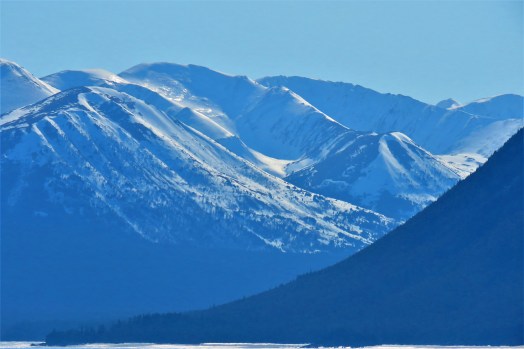
The winter winds would blow down from the mountains. The snow from the peak would come down and coat the trees even when the sky was clear sometimes. Their cabin was built just below the tree line where the trees still grew tall and could shield it from the worst of the mountain gusts.
She would awake in their bed, naked and usually sweating, even on the coldest of nights. In the morning she would resent leaving their pile of blankets and the warmth of his body. But she knew that if she didn’t he would be slow to rise, and there was much to do. She would reach down beside the bed and find her nightgown, pull it over her head and watch the steam from her breath blow out. It was always colder in the mornings after the fire went out in the night.
Their coffee maker had died during the winter. The road was cut off until spring and so they had learned to make do with the old French press covered in dust. She started the kettle, readied the coffee and stood by the counter. She gazed out the window over the sink, lost in thought as she waited for the shriek of the boiling water. It was his alarm. She reveled in the alone time before the day started.
Winter was quiet. Snow deadened nearly all sound, but their muted conversations as they trekked through it in snowshoes to gather wood, and sometimes to hunt game—deer but mostly winter fowl.
She regretted the life of the animal they would take, but it made the food better, and she knew what they did was to survive. Though, occasionally, she missed the steaks and prime rib they used to eat when they lived in the city.
The kettle started to steam and she shut it off after a few minutes. A little later, he stood in the doorway of the bedroom and stretched his arms. His beard was long and full; he didn’t shave in the winter. Its length to her was a sign of the coming of spring.
“It’s colder this morning,” he said to her but mostly to himself. He scratched his hairy chest and then came to her. He gave his customary morning hug in the kitchen by the window.
“The snow will melt again when the sun rises,” she said to him as she felt his hair against her cheek.
“I think the trees will bloom soon.” And he poured the water from the kettle into the French press.
“The dog needs walked,” she said to him.
“Coffee first.”
They sipped their coffee and the dog, Kasha, stayed quietly by his feet. Kasha was a mutt he had rescued from a farmer who was going to put her down. Kasha was a good dog now; she only barked when the wolves cried and sometimes she would cry with them.
I wonder, she thought, what they are singing for. Kasha howled along. What is this sad song for? And maybe it was nothing, but sometimes when the pack sang it was as if they were remembering something from long ago.
The wolves had been quiet for some time. She knew the mothers of the pack would probably birth soon, if they hadn’t already. A new dawn was beginning for them, a new thing, but also not such a new thing. It will happen again and again.
She washed the coffee cups as he pulled on his OshKosh. “Wir gehen mal Pipi machen, Hund,” he said and laughed a little. It was a deep almost raspy sound. Kasha danced a little as he opened the door. He grabbed his wool sweater off the hook and shut the door behind him.
Sun pierced into his eyes and he squinted as he adapted to the light. Kasha was off like a bolt of fur, running and jumping in the snow. The warmth from the rising sun settled on him comfortably like a warm coat. He closed his eyes and felt his breath come in and push out. Kasha barked at him and he smiled. She sat next to him with a stick at his feet.
“Nur ein kleines Stück,” he tells her. She smiles and her tongue wags and wags. He picks the stick up and throws it.
The Hund jumps and chases the stick. It’s an old familiar game and she wears herself out as she pulls herself through the melting snow.
Sometimes in the deep she feels the cold breaking through her fur. He lets her rest and pant for a while. He finally calls her when he smells the brats cooking. She comes to him. She is an old dog now; youth has escaped her, but it comes back sometimes in the morning when he lets her out. She pants, happily exhausted.
“The radio says it will rain tomorrow.”
He looks up from his breakfast with surprise. “Not snow?”
“No, rain.”
“Spring is coming.”
“I think it’s here.”
“Tell me when the snow is gone and I sweat.”
“You sweat all the time though.”
“Wie ein Schwein in der Hitze,” he says in German. She giggles and flicks a piece of food at him from across the table. He dodges it and Kasha eats it up off the floor. They talk as old lovers who are really the very best of friends do when no one is around but them while they eat. She sparkles at his jokes and he still loves her very much.
“I will change the fuel filter on the Volvo today.”
“Yes and put fuel in it.”
“It will be ready when the road is.”
“Perfekt.”
He trudges to the tarp covered vehicle after breakfast. She readies the fire. She will not make it too strong, because the heat will be too much once the sun reaches its zenith. He pulls the tarp from the old Volvo and looks at the snow that has built up around it. He’ll have to shovel it before he can jack it up and remove the gas tank. He looks at the sky.
“Mach mein nächstes Leben einfacher, okay?” he says to whomever is listening. He pulls his sleeves up.
She lets Kasha out. Kasha comes next to him and he leans down and pets her. He retrieves a shovel from the side of the cabin and begins shoveling. Kasha walks slowly to the porch and plumps down on it.
He hears a golden plover call from somewhere. Little bird, are you lost? He wonders to himself. It doesn’t answer so he shovels and swears. The dog half-heartedly watches him from the porch. Her ear lazily raises up. The dog isn’t worried. The man will be ready to play soon.
The sun reaches where she lays and she feels the fur grow warm. Her breathing is heavy and it begins to slow.
He finishes changing the fuel filter an hour later. The tank is heavy even though it is mostly empty and he struggles. He doesn’t know how many more years he can do this.
His scars stretch and hurt when it is cold. He finishes and rolls out from under the car. He lets the jack down and retrieves the gas can. Five gallons can get them into town, but he fills it with ten from the spare tank in the back just in case.
The melting snow crackles under his boots. He pushes on his sore back with his hand. He gained much weight this winter and his muscles feel the strain.
He retrieves the battery from the warm shed next to the house. He adds distilled water to it and places it in its spot on the car. Some springs it starts, some springs it doesn’t and they must use the clutch to start the car. It starts after the third turnover. He smiles to himself.
He lets it run for a while. Kasha is sleeping on the porch so he doesn’t awake her. He opens the door and walks into the house. She is baking bread. She learned how to make it right years ago and it is his favorite thing she makes. She smiles at him and he sits to take off his boots.
“Struggled this time?”
“It gets a little harder every year.”
“Next year grow your muscles instead of your stomach,” she says and he laughs.
“Das hört sich schrecklich an.”
“I cannot let you get any fatter or I will not be able to get into bed and I will be forced to make you sleep next to Kasha.”
“At least she doesn’t snore.” She laughs and slaps his chest with a flour covered hand. He guffaws and pulls her close. She rests her head on his chest.
“We’re not getting any younger,” she says to him.
“No.”
“Call Kasha in, I have some dough for her.”
“You speak of fat and yet that is all you feed our dog,” he says over his shoulder. He opens the door.
“Kasha, komm,” he says. Kasha doesn’t hear him. “Kasha.”
Kasha is unnaturally still. He sits.
Shit.
He puts his hand on her fur.
Shit, old girl. He rubs her unresponsive head.
She comes to the door to watch them play. The air mists with rhythm as she breathes. Then it doesn’t. She knows. She lets out a long exhale.
“Get me a shovel.” She slides her boots on. They walk together toward where the forest opens a little.
“The ground will be frozen,” she says to him.
“I will manage,” he says.
He puts the dog down and then he digs, digs, digs. His muscles at first are stiff. By the time it is deep enough they hum in a recognizable heat.
When he is finished he picks Kasha up. He pulls her in tight for a second. Then rests her one last time. They stand for a while. The breeze is warm and he feels it in his beard. It blows the snow from the tree branches to the ground, but it matters little to him right now.
“Mein guter Hund,” he says finally and pulls her to him. She holds him firm and loves him. Later that night she hears the wolf pack singing. She hears pups howling. He hears them too, but he always knew why they sang. It isn’t important to him, and his old war wounds hurt a little more.
Her breathing changes, but he isn’t able to sleep. The wolves’ howling keep him company. The next morning she awakes to the sound of rain on their roof. She rolls over but he is already up. She pulls on her nightgown and climbs out of bed. He has the coffee ready. She didn’t even hear the whistle of the kettle.
He gives her his customary hug and she kisses him. They don’t say anything, and he looks at the door where his boots are, and where Kasha isn’t. His shoulders sag.
After breakfast he slides his boots on. She slides her boots on too and they step outside, but stay in the relative dry refuge of the front porch. The tree branches are spotted green; the rain has awoken the leaves and they are beginning to bud. A golden plover flitters onto a branch and calls to them.
He holds her a little more tightly than usual as they watch the bird dance from branch to branch.
“I don’t feel like going into town today.”
“Neither do I.” She rests her head against his chest and feels his inhale.
A tiredness grows in him.

 Storied By Josh